Blankenese Hamburg: A Free Guide To The Stairway Quarter On The Elbe
Blankenese is a hillside quarter on the Elbe where the sights are the streets themselves: stairways, gardens and river views, all open public space and all free to walk.
Short answer
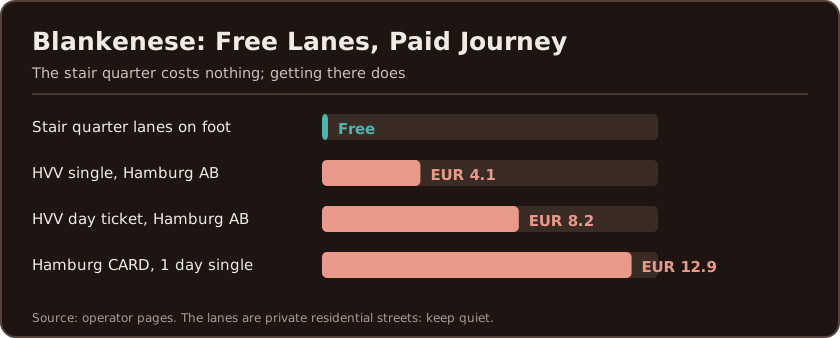
Yes, Blankenese is free to visit. The stairway quarter, its steps and its Elbe riverbank are open public space with no entry charge anywhere. Your only cost is transport: an HVV single in the Hamburg AB zone is EUR 4.10, a day ticket EUR 8.20. There is no ticket office, no gate and no paid viewpoint.
Blankenese sits on the northern bank of the Elbe, west of the city centre, and its main attraction costs nothing: the quarter itself. The streets climb the hillside in narrow lanes and long stairways, and the whole network is open public space, free to walk from bottom to top. This guide covers what is genuinely free in Blankenese, what the transport really costs, and how the quarter fits into a wider free day on the Hamburg waterfront. For the full free-walks picture across the city, see free walking tours in Hamburg.
What Is Blankenese In Hamburg?
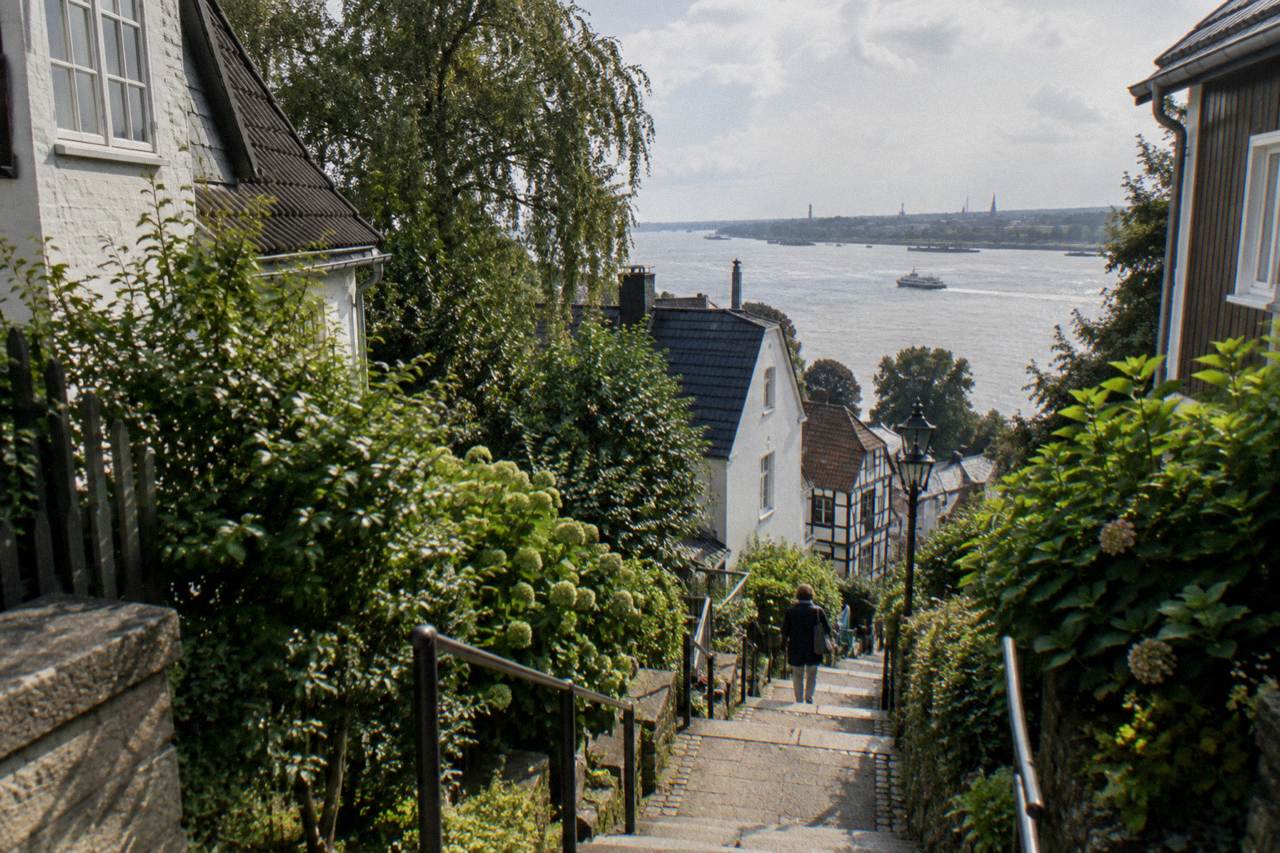
Blankenese is a hillside residential quarter on the Elbe's northern bank in western Hamburg, known for its staircase lanes between old villas and gardens. Known as the Treppenviertel, or stairway quarter, it is ordinary public street space, so walking it costs nothing and needs no ticket. The riverbank at its foot is open public space too.
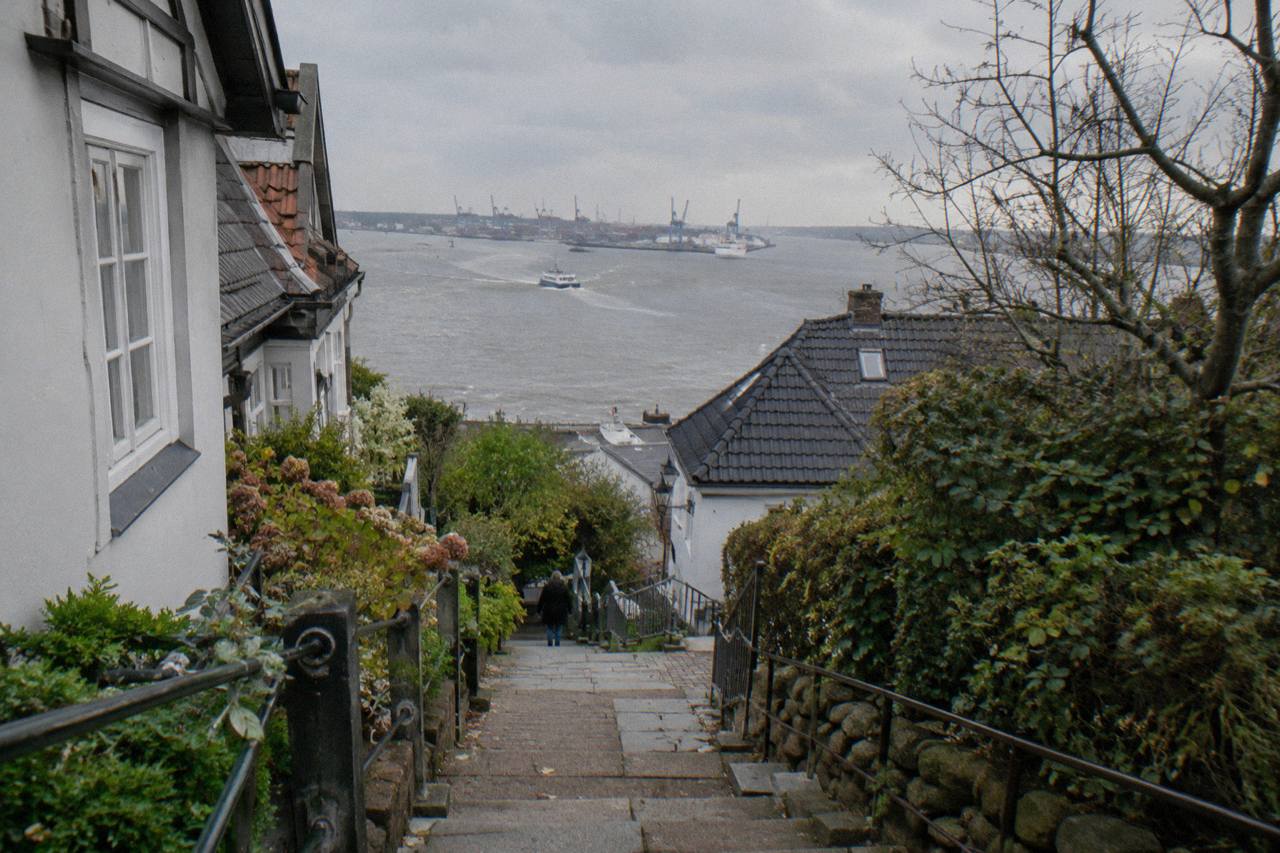
The name Treppenviertel refers to the stairways that connect the streets where cars cannot climb. Houses stand on terraces cut into the slope, and the lanes between them are narrow, stepped and, in a few places, little more than a staircase between two garden walls. There is no museum here, no gate and no entrance fee, because the quarter's appeal is architectural and topographic rather than institutional.
That also means there is nothing to book. You arrive, you walk, you look at the river. The view changes with every flight of steps, and the whole thing reverses itself on the way down. In a city whose headline sights include two paid churches towers and a concert hall with a ticketed plaza, Blankenese is the counterweight: a district where the free thing and the main thing are the same thing.
What Blankenese does not have is a scripted set of sights. No stop-by-stop route is published for this walk, so this guide does not invent one. What is verified is simpler: the streets and steps are public, the riverbank is public, and the quarter sits on the Elbe downstream of the harbour. Everything free about it follows from those facts.
Is Blankenese Free To Visit?
Yes, completely. The stairway quarter is open public street space with no entry charge, no gate and no ticketed viewpoint, and the Elbe riverbank below it is open public space as well. The only money you need is the transit fare to get there, from EUR 4.10 for a single HVV ticket in the Hamburg AB zone.
Hamburg's free attractions split into clean categories: open public space, which is free always; conditionally free sights, where a rule applies; and paid sights that are sometimes mistaken for free ones. Blankenese belongs firmly in the first category. Streets, stairways, steps and the riverbank promenade are public infrastructure, maintained by the city and open around the clock like any street.
The traps nearby are worth knowing so they do not contaminate the plan. The Elbphilharmonie Plaza, further upstream, is no longer free: it charges EUR 5 per ticket, with EUR 3 reduced and free entry only for children under 3 and nursery or school groups. St. Michaelis has a free nave but a ticketed tower. The HVV harbour ferries, which share the river with Blankenese views, need a valid HVV ticket, a Hamburg CARD or the Deutschlandticket before you board; they are a cheap cruise, never a free one.
None of that touches Blankenese itself. The table below shows how the quarter and its neighbours sort into free, conditional and paid.
| Sight | Status | What it costs |
|---|---|---|
| Blankenese stairway quarter | Free, always | Nothing, it is public street space |
| Blankenese Elbe riverbank | Free, always | Nothing, open public space |
| Elbstrand beach at Övelgönne | Free, always | Nothing, open public space |
| Alter Elbtunnel | Free on foot or bicycle | Nothing, open around the clock except New Year's Eve 21:00 to 04:00 |
| Elbphilharmonie Plaza | Paid | EUR 5 booking fee per ticket, EUR 3 reduced |
| HADAG harbour ferry line 62 | Paid | Needs an HVV ticket, Hamburg CARD or Deutschlandticket |
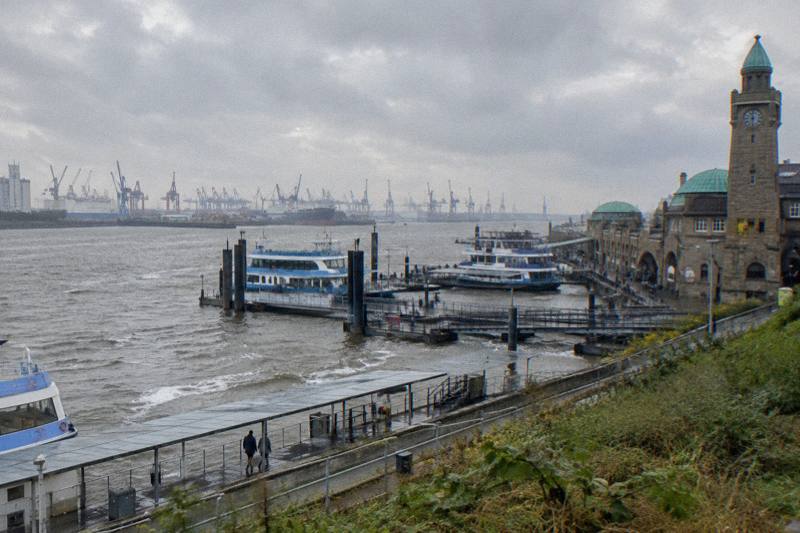
If a free Hamburg day has a shape, it is this: public space along the Elbe, stitched together by paid-but-cheap river transit. Blankenese is the western end of that stitch. The eastern end is the Landungsbrücken and the Speicherstadt, and the walks below cover exactly that ground.
What Do You Actually See In The Stairway Quarter?
Steep stepped lanes, old villas and terraced gardens on the Elbe slope, and river views that open up between the houses. All of it is street-level architecture you walk through rather than attractions you enter, so the experience is free by nature. There is no verified stop list, so treat any walk here as your own route.
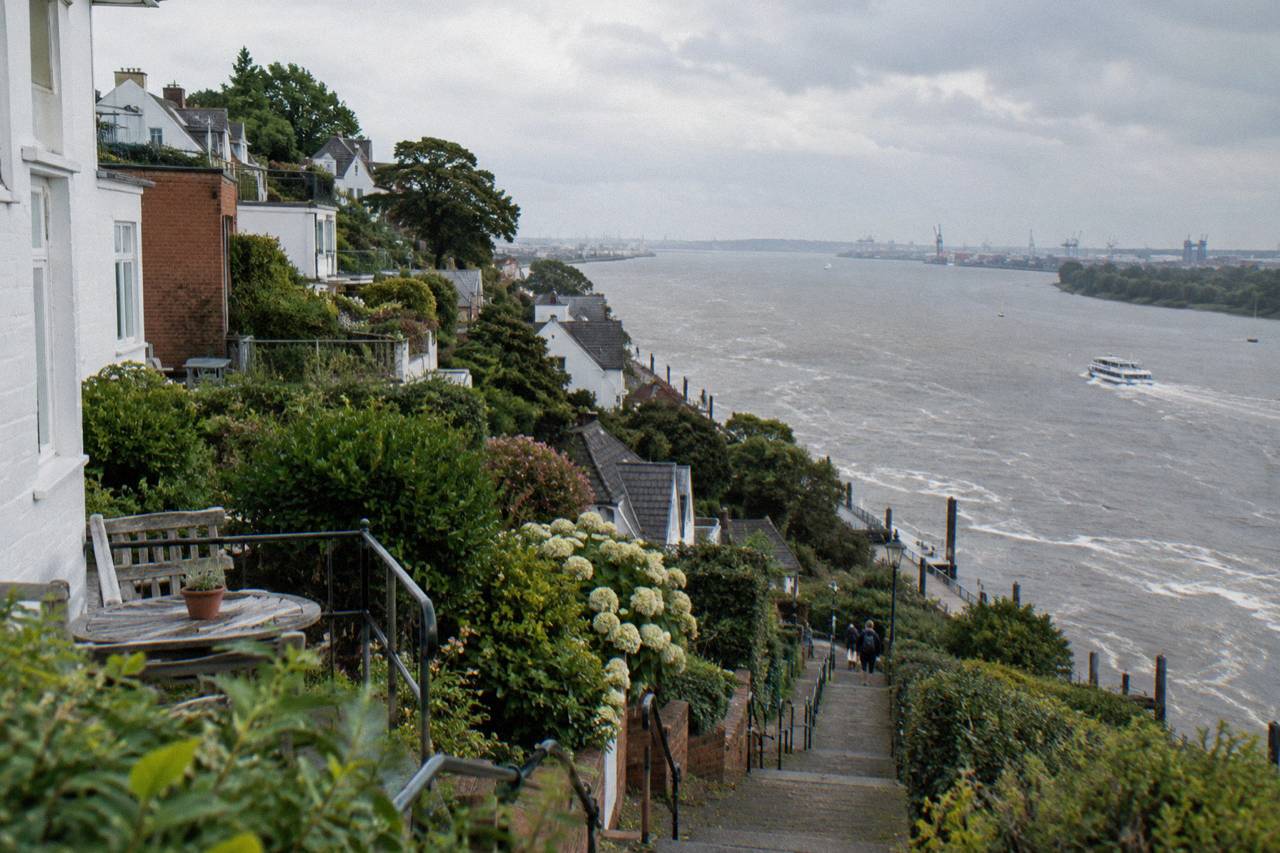
The quarter's character comes from its terrain. The hillside is steep enough that some connections between streets exist only as stairs, and the houses stack above and below each other on retaining walls. Gardens fill the gaps. From the upper lanes the Elbe opens out below, with ship traffic moving between the banks. From the riverbank you look back up at the terraces.
Because the streets are the sight, there is no opening hour and no season. Rain makes the steps slick but does not close them. Winter shortens the daylight, and mid-November sunrise in Hamburg sits around 07:43 with sunset around 16:24, so a winter visit has a long dark tail; that is a daylight fact, and the operators publish no other timing advice.
One honest caveat: no fixed route, staircase count or set of must-see lanes for Blankenese has been published. Any list of specific stops would be invention. The quarter's nature, its public status and its setting are the settled facts. Walk up, walk down, and let the hillside do the work.
Where Are The Best Free River Views In Blankenese?
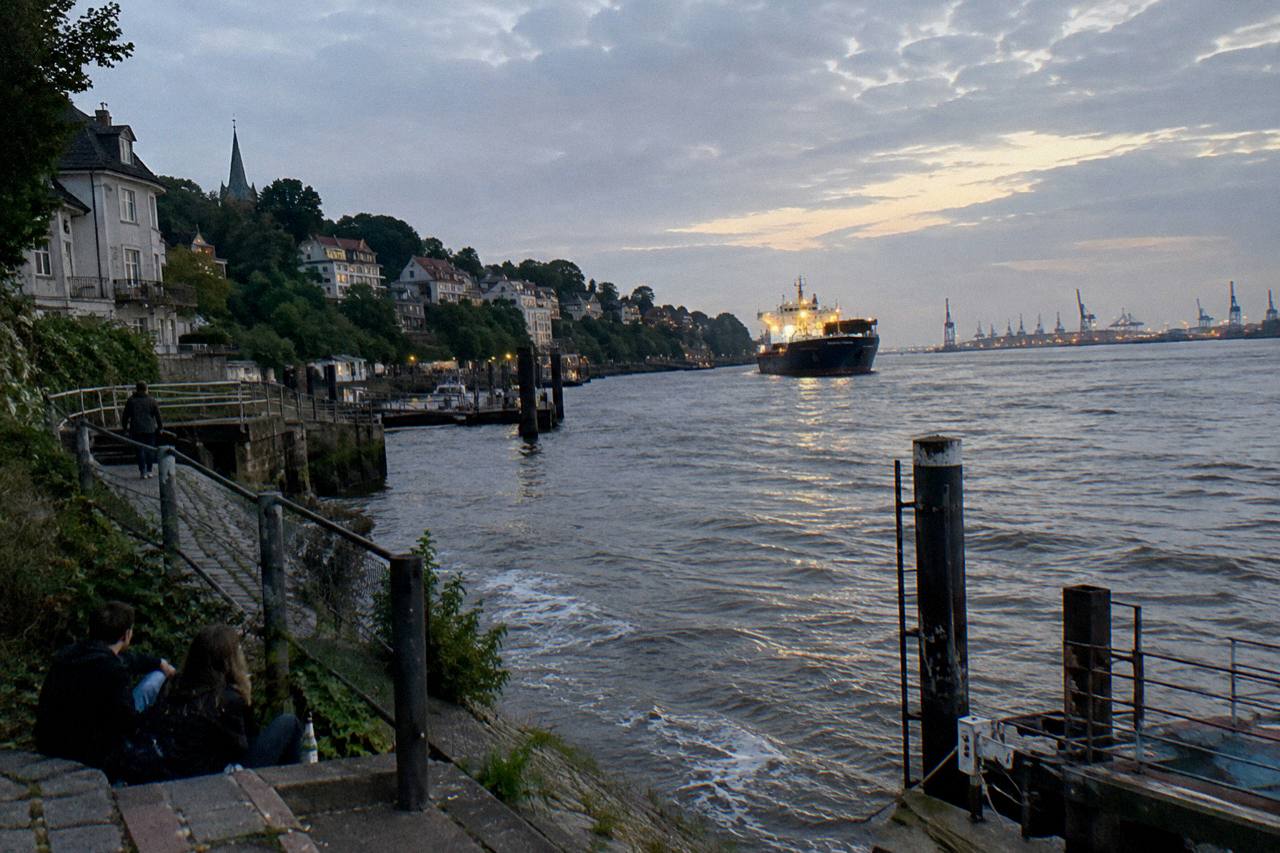
The Elbe riverbank at the foot of the quarter is the free viewpoint: open public space with sightlines across the river to the southern bank and along the shipping channel. Free harbour views in Hamburg are the Landungsbrücken, the Alter Elbtunnel and the Elbstrand, and Blankenese's bank belongs on that same list.
The bank runs level with the water, so the view is wide rather than elevated. Container ships, ferries and pleasure craft all pass on the Elbe, which is a working river, not a lake. Looking back up gives you the quarter from below, terraces stacked against the slope, which is the classic Blankenese composition.
Upstream along the same bank, the free string continues. The Elbstrand, Hamburg's river beach, is open public space, covered in detail in the Elbstrand guide. The Landungsbrücken, the historic pontoon landing bridges, are open public space too and hold their own free outlook over the harbour; see Landungsbrücken and the harbour. The Alter Elbtunnel, free on foot and by bicycle around the clock apart from New Year's Eve 21:00 to 04:00, adds a view from under the river.
One paid neighbour should be flagged so it is not mistaken for free: the Elbphilharmonie Plaza, the viewing level of the concert hall, charges EUR 5 per ticket and EUR 3 reduced, with under 3s and school groups free. Blankenese's bank and stairs are the honest alternative, and they cost nothing.
| Free viewpoint | Where | What you see | Access |
|---|---|---|---|
| Blankenese riverbank | Foot of the stairway quarter | Elbe shipping and the southern bank | Open public space, free |
| Elbstrand | Övelgönne, east of Blankenese | River beach and passing ships | Open public space, free |
| Landungsbrücken | St. Pauli waterfront | Harbour pontoons and Elbphilharmonie silhouette | Open public space, free |
| Alter Elbtunnel | Landungsbrücken to Steinwerder | River crossing from beneath the Elbe | Free on foot and by bicycle, 24/7 |
If you would rather have the harbour interpreted than just looked at, the free walks that cover the waterfront start at the Landungsbrücken and in HafenCity. The 2-Hour Port, Reeperbahn and Beatles walk, run by Robin Events & Guides on GuruWalk, is rated 4.79 out of 5 across 1,202 GuruWalk reviews, runs two hours in German and English, and meets at Landungsbrücken, Bridge 5, the same waterfront you can follow west to Blankenese. Read more on the 2-Hour Port, Reeperbahn and Beatles tour page, or See this free tour on GuruWalk. Every walk in the city's roster of 8 free walking tours is free, pay what you want, and reserved on GuruWalk; this site neither operates nor is affiliated with GuruWalk.
How Do You Get To Blankenese And What Does It Cost?
Blankenese sits in the western reach of Hamburg's HVV network, so the trip needs a paid ticket: an HVV single in the Hamburg AB zone costs EUR 4.10 and a day ticket EUR 8.20. Public transport in Hamburg is never free for visitors, and the Hamburg CARD, from EUR 12.90 for one day, is a paid tourist card that covers AB-zone travel.
The fare facts are simple and worth fixing before you travel. A Hamburg AB Einzelkarte is EUR 4.10, the Tageskarte is EUR 8.20, and the Deutschlandticket costs EUR 63 per month since 1 January 2026. The Hamburg CARD runs EUR 12.90 for one day, EUR 24.90 for two, EUR 35.90 for three, EUR 46.90 for four and EUR 54.90 for five, and includes AB-zone HVV travel plus discounts at listed attractions. Current fares are published by HVV.
Two distinctions keep the budget honest. First, transport is a real cost, not a hidden freebie: no Hamburg transit is free for tourists. Second, the harbour ferries, including line 62, run on the same HVV tickets, so a day pass can fold a river crossing into the Blankenese trip. Whether the ferries suit your route is covered in can you use an HVV ticket on the harbour ferries, and the fare options are compared in is the Hamburg Card worth it.
| Ticket | Price | What it covers |
|---|---|---|
| HVV Einzelkarte Hamburg AB | EUR 4.10 | One single journey in the AB zone |
| HVV Tageskarte Hamburg AB | EUR 8.20 | One day of AB-zone travel, harbour ferries included |
| Deutschlandticket | EUR 63 per month | Nationwide local and regional transport |
| Hamburg CARD 1 day | EUR 12.90 | AB-zone travel plus discounts at listed attractions |
| Hamburg CARD 3 day | EUR 35.90 | Same coverage over three days |
A day ticket often makes sense when Blankenese is one stop on a chain, because the same pass carries the harbour ferry and the return to the centre. A single does the job if the stairway quarter is your only destination. Either way, buy before you board.
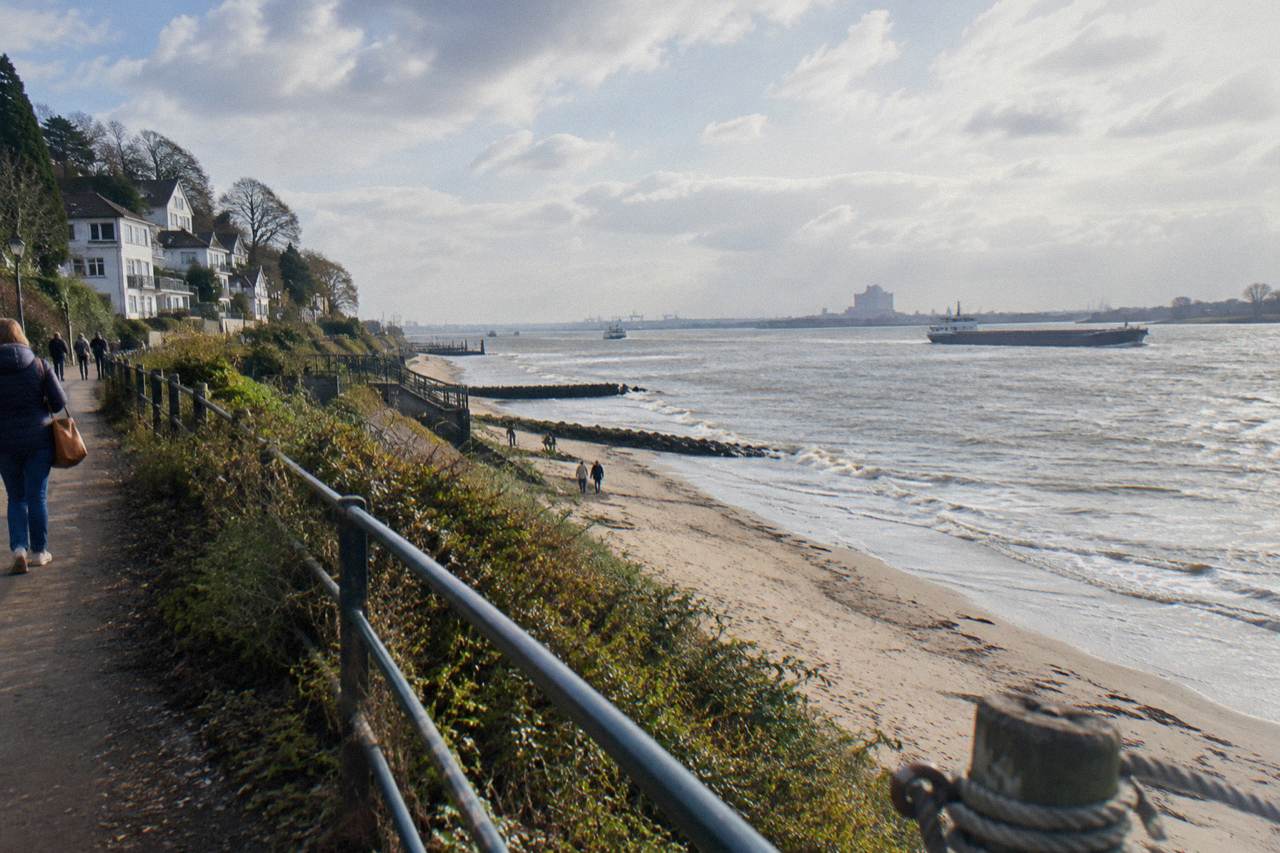
Can You Combine Blankenese With Other Free Hamburg Sights?
Yes, the quarter sits at the western end of a free chain along the Elbe: the Elbstrand beach, the Landungsbrücken, the Alter Elbtunnel and the HafenCity and Speicherstadt districts are all open public space, connected by the same HVV zone. Only the crossings and the paid towers cost money.
East of Blankenese the bank runs through Övelgönne and the Elbstrand, then reaches the Landungsbrücken. From there the free options multiply: the Alter Elbtunnel down and under the river, the stairways back up into St. Pauli, and the Speicherstadt and HafenCity further east, the UNESCO-listed warehouse district whose streets and canalsides are public. The Speicherstadt guide and the HafenCity guide cover both districts in detail.
The joins between them are where the money sits. The HADAG ferries need a ticket. The Speicherstadtmuseum, Miniatur Wunderland and the Hamburg Dungeon, all in or beside the Speicherstadt, are ticketed. St. Michaelis has a free nave but a tower at EUR 8 for adults, and St. Petri charges EUR 5 for its tower while the nave is free. Church free, tower paid: two facts, never one.
For travellers who want the waterfront explained rather than just traversed, two GuruWalk walks cover it in English. The Walkative Port and Beatles Walk, run by Walkative! Tours, is rated 4.9 out of 5 across 297 GuruWalk reviews, runs 2 hours 15 minutes in English, and meets at the Elbphilharmonie entrance in HafenCity. Details are on the Walkative Port and Beatles tour page, or See this free tour on its GuruWalk listing.
The combination works because the free layer is contiguous. You never pay to see the river, the beaches, the stairways or the warehouse streets; you pay only to move faster, climb towers or enter museums. Plan around that line and a long Hamburg day stays close to the cost of a day ticket.
What Does A Free Blankenese Visit Look Like In Practice?
A free visit is: a paid HVV ride west, then hours of walking public stairways and riverbank with no further charges. Bring shoes that grip, accept the weather as it comes, and budget nothing beyond the fare. Winter visits are fully possible, only short on daylight.
The practical core is footwear and pace. The stairways are steep, and the return trip doubles whatever you climbed. No published route covers the stair lanes of Blankenese, so wandering is the way: pick a lane uphill, follow the terraces, and come down by a different stair. The quarter is residential, so the walk is quiet by nature, and the street space is public around the clock.
Seasons change the frame but not the price. The trees on the slope turn in autumn and the river views sharpen in winter air. Hamburg sees roughly 12 to 17 rainy days a month through the colder half of the year, with November days near 8C and December near 4 to 5C, so layers and a rain shell matter more than timing. Quiet hours are not published, so no claim is made about them.
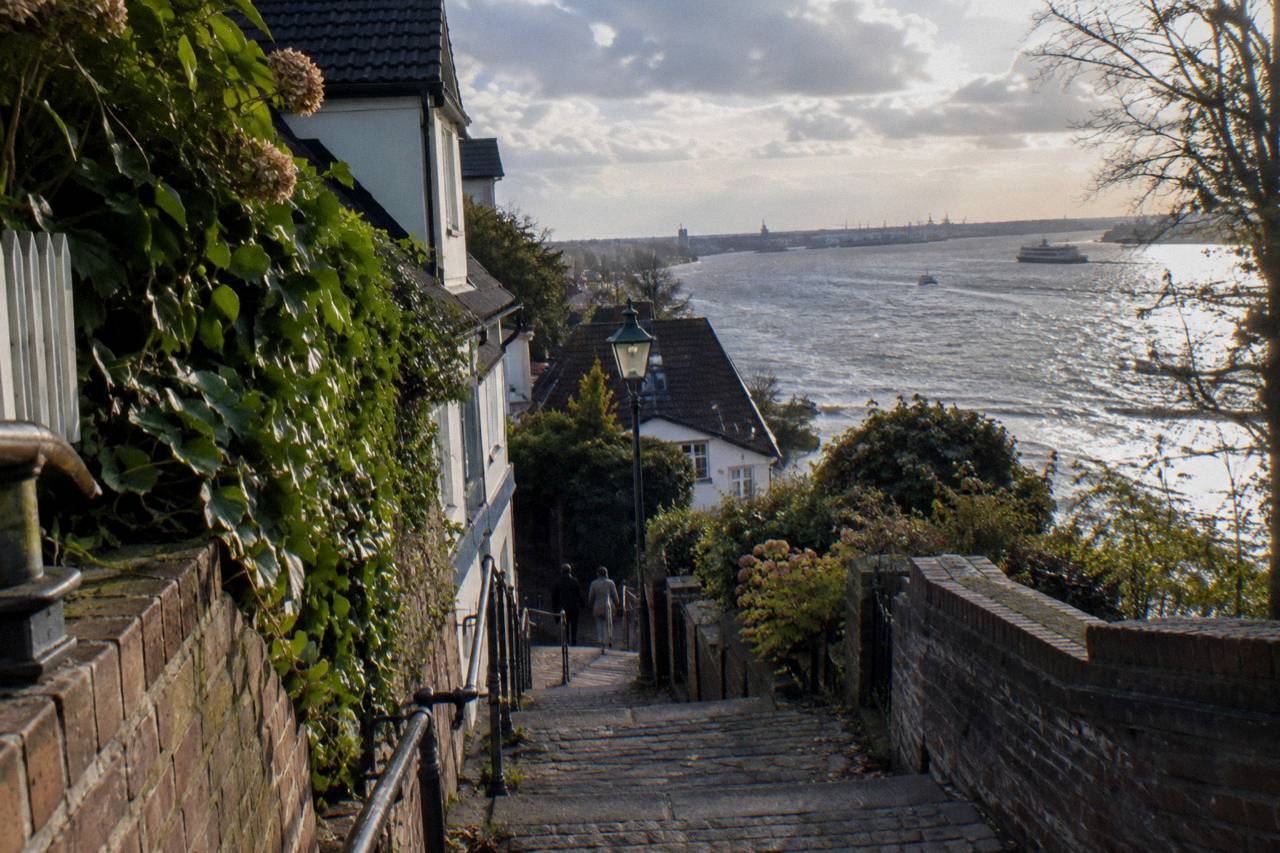
If the day stretches, the free chain runs both ways. West of Blankenese the bank continues toward the Elbe's wider reaches; east it runs through the Elbstrand and the Landungsbrücken to the Speicherstadt. The ferry crossing in between, line 62, is a paid ride on an HVV ticket rather than a free cruise, a distinction this site keeps deliberately, because miscasting it as free is the most common error in Hamburg budget planning.
Blankenese rewards the slow approach, and slowness is the one travel style that costs nothing. For the wider picture of the city's no-charge layer, start with Free Things To Do In Hamburg and work inward to the districts that interest you.
Common Questions About Blankenese
Is Blankenese Free To Enter?
Yes. The stairway quarter is ordinary public street space with no gate, ticket or entry charge, and the Elbe riverbank at its foot is open public space too. The only cost is the transit fare to reach it, from EUR 4.10 for an HVV single in the Hamburg AB zone.
How Much Time Do You Need In Blankenese?
Most of a relaxed half day covers the stairways and the riverbank at walking pace. There is no timed attraction inside the quarter, so the length is entirely your choice: the streets are public and open around the clock, and daylight, roughly from 07:43 to 16:24 in mid-November, is the only real constraint in winter.
How To Get To Blankenese?
An HVV Einzelkarte in the Hamburg AB zone costs EUR 4.10 each way. A Tageskarte at EUR 8.20 pays off if you also ride the harbour ferries or return the same day, and a Hamburg CARD from EUR 12.90 bundles AB-zone travel with attraction discounts.
Are The Blankenese Stairs Open At Night?
Yes. The stairways are public streets, open around the clock like any other road in the city. No separate night rule is stated for Blankenese. Practical caution applies as with any unlit stepped street, and winter evenings arrive early in Hamburg.
Can You Walk From Blankenese To The Elbstrand?
Both sit on the same northern bank of the Elbe and both are open public space, so the riverside connection is free to walk. No distance is stated for the stretch, so check your map for the day's total before setting out, and note the HADAG ferries that serve the river need a valid HVV ticket.
Is Blankenese Worth Visiting In Winter?
Yes, if you dress for it. The quarter's sights are its streets and views, which winter does not close, and Hamburg winters run near 4 to 5C by day in December with 12 to 17 rainy days a month. Shorter daylight is the main constraint; the price is the same as in summer, which is nothing.